



ChatGPT said:
At 23, a woman married a widower and instantly became stepmother to his kids.
- She was expected to handle childcare and household duties on top of a young marriage.
- The weight of responsibility became too much.
- After two years, she left a note and walked away.
Fifteen years later, the children reached out. They accused her of abandonment and questioned her choices.
The woman shared her side of the story online, reflecting on the impossible situation she faced at such a young age.
Do you think she was wrong for leaving, or was it unfair to expect so much from her?
Bonds between stepparents and stepchildren can grow into strong, meaningful connections. But they often carry challenges.
Image credits: Alexander Mass / Pexels (not the actual photo)
A woman revealed that her former stepchild reached out after 15 years, accusing her of abandoning them when she left the marriage.
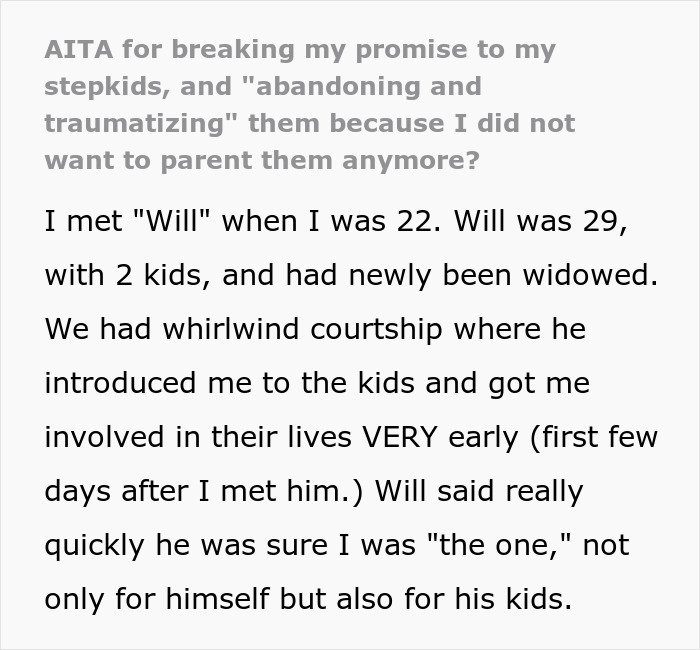

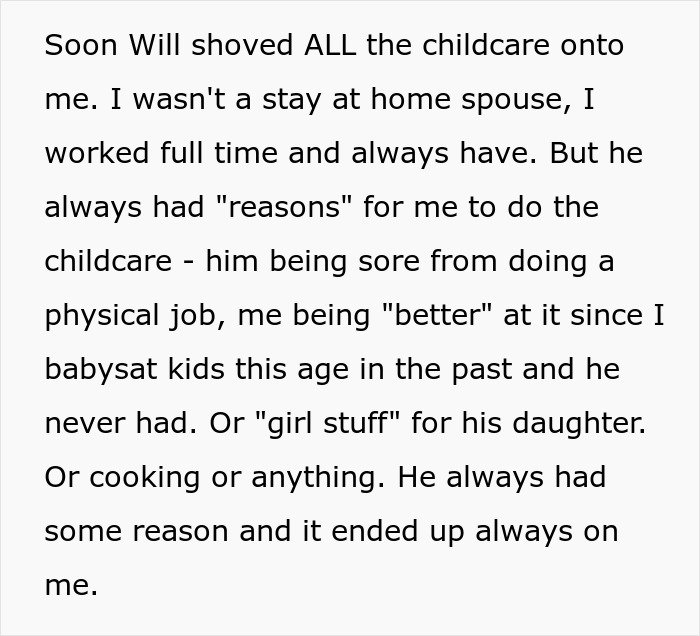

Image credits: Lisa from Pexels / Pexels (not the actual photo)




Image credits: Getty Images / Unsplash (not the actual photo)



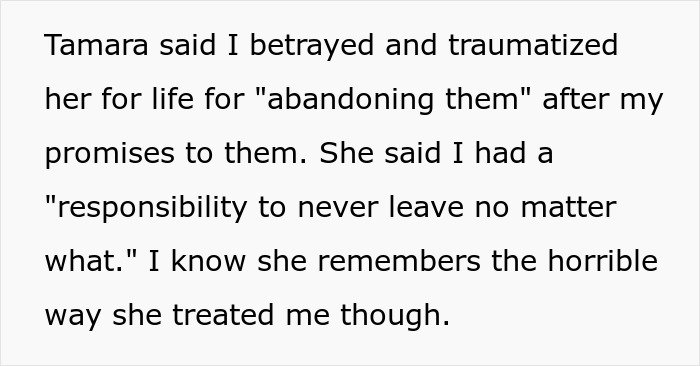
Image credits: Ok_Stairs_3264
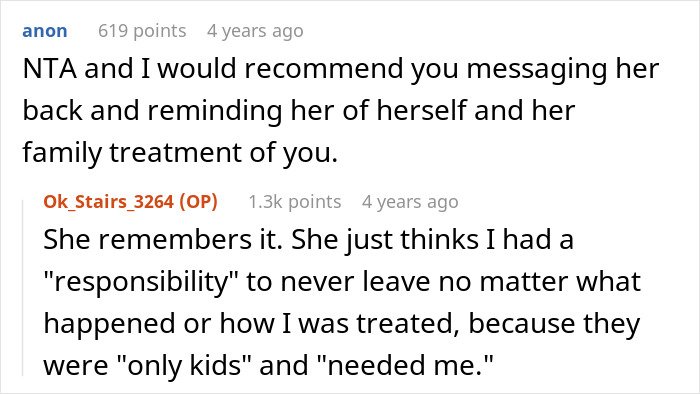
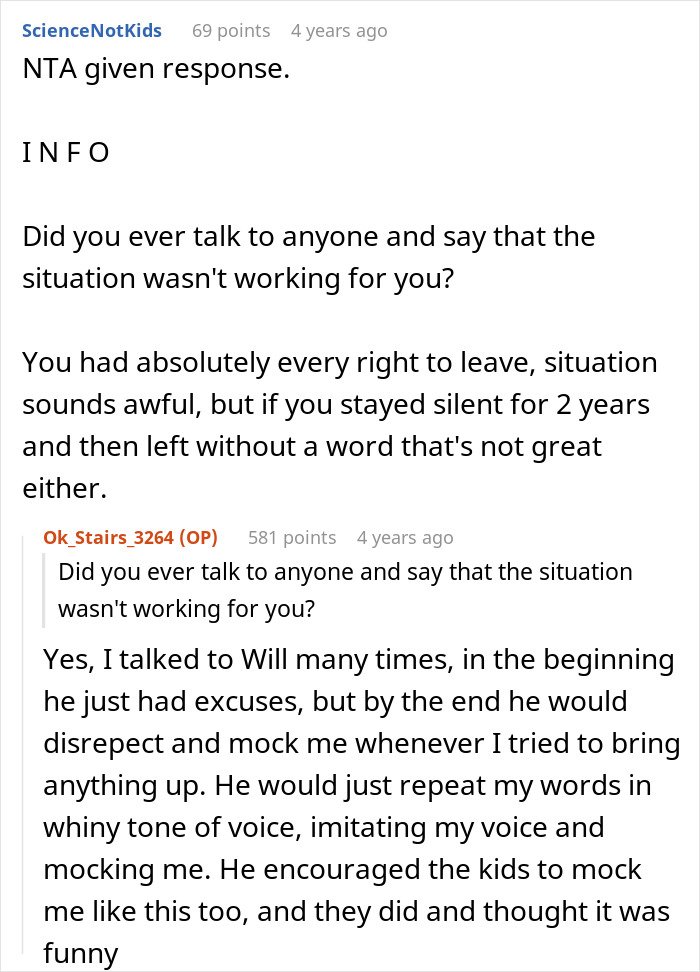
The author went on to share more details about what led to her decision and how things unfolded after she left.
Clear, age-appropriate conversations help children understand separation without feeling abandoned. It gives them space to ask questions, express feelings, and feel reassured about their place in the family.
When you marry someone, you also take on certain responsibilities toward their family, especially if there are children involved. Being a stepparent or partner to someone with kids comes with unique challenges, and it’s important to recognize your role in their lives while respecting boundaries. Balancing love, authority, and patience is always the key.
So, when you decide to separate from your partner, it becomes equally important to handle the situation thoughtfully. Explaining the separation to children requires patience, care, and honesty. Kids naturally take cues from adults, so the way you communicate can shape how they process the changes emotionally and mentally. Clear, compassionate conversations help children feel secure and supported, even amid difficult transitions.
First and foremost, children need to know that they are loved. Reassure them that your feelings for them have not changed, and that they are safe, supported, and valued. This can provide a sense of stability during a period of uncertainty. Small gestures like extra hugs, listening attentively, or spending dedicated time together can reinforce their sense of security. Remember, consistent reassurance goes a long way in helping them feel grounded.
Honesty and openness are equally important. Explain the situation in age-appropriate terms, answer their questions honestly, and avoid hiding emotions. Children benefit from clear communication, which helps them understand the reality of the changes without feeling confused or neglected. Be patient if they ask the same questions multiple times; it’s a way for them to process the information at their own pace.
The focus should be on guiding your child through these changes in a way that supports their emotional well-being, rather than rushing for convenience or speed. Encourage them to express their emotions, validate their feelings, and give them the time they need to adjust. Avoid rushing them to “get over it” or minimizing their reactions. Supporting their emotional processing now can prevent lingering anxiety or resentment later.
Make sure they understand that the separation is not their fault. Children often internalize blame, wondering if they somehow caused the split. Emphasize that the situation is between adults, and reassure them repeatedly that they are not responsible. This helps protect their sense of self-worth and reduces unnecessary guilt.
Parents should avoid blaming their partner, especially in front of the children, to protect their emotional well-being and maintain trust
Address the practical changes as well. Talk about routines, visitation schedules, holidays, and special occasions—whether it’s Christmas at one parent’s house or Thanksgiving at the other. Having clear expectations and predictable schedules helps reduce anxiety and gives children a sense of control during a confusing time. Even small details, like bedtime routines, can make a big difference in providing stability.
Avoid blaming your spouse or projecting anger onto the children. They need to feel emotionally and physically safe, without carrying the weight of adult conflicts. Keeping arguments and frustrations between adults and away from the kids protects their mental well-being. Modeling calm, respectful behavior can help children process the situation more constructively.
Finally, support children through the grieving process. Let them know you are there for them, listen when they need to talk, and encourage healthy outlets for their emotions, like drawing, writing, or physical activity. Normalizing feelings of sadness, confusion, or anger helps them cope in a healthy way. A thoughtful, patient approach can help them adjust and maintain strong bonds with both parents despite the challenges.
In this situation, it seems like things were overwhelming for the author. Perhaps there could have been a better way to handle it, or maybe the circumstances were simply too complex to manage perfectly. What are your thoughts on how this could have been approached?
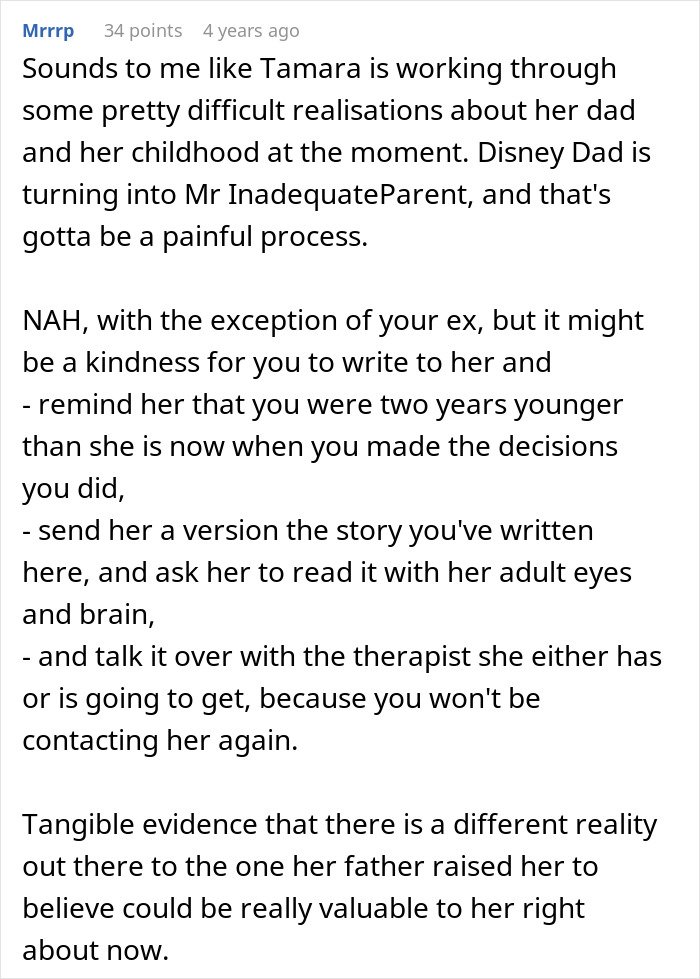
Many people felt the woman acted appropriately and argued that she had no obligation toward her ex-husband’s children

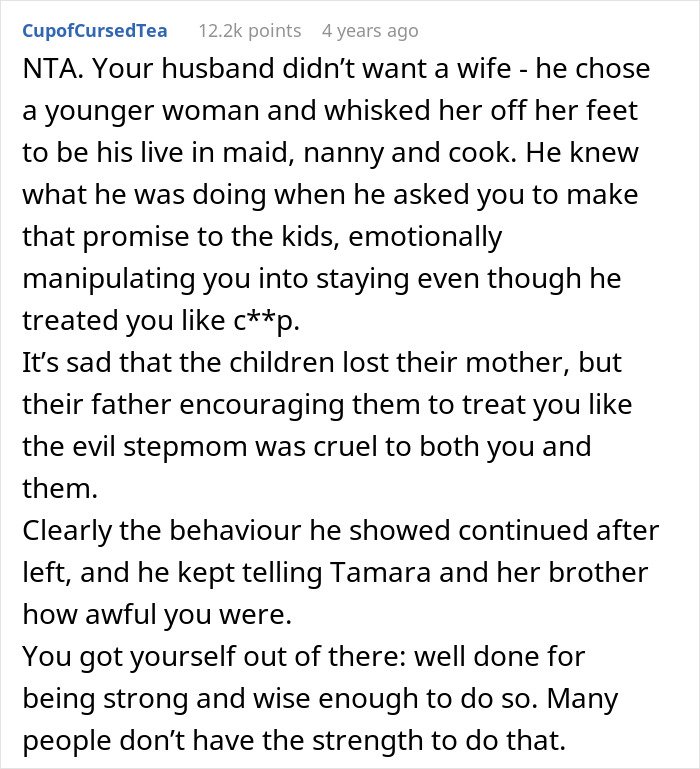




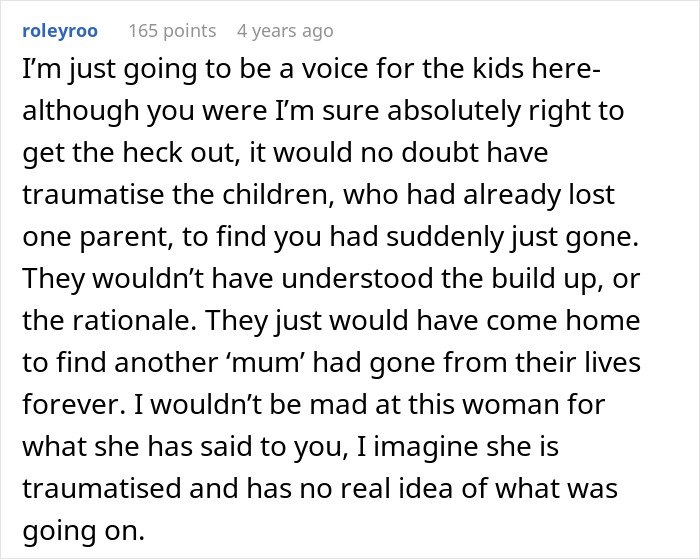







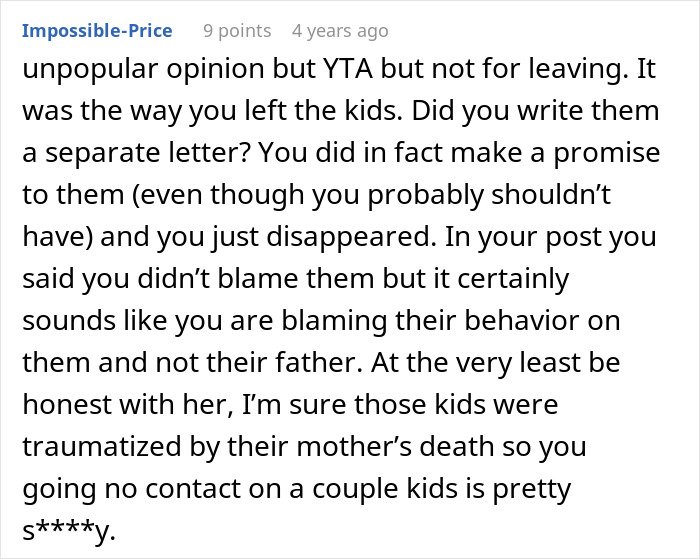
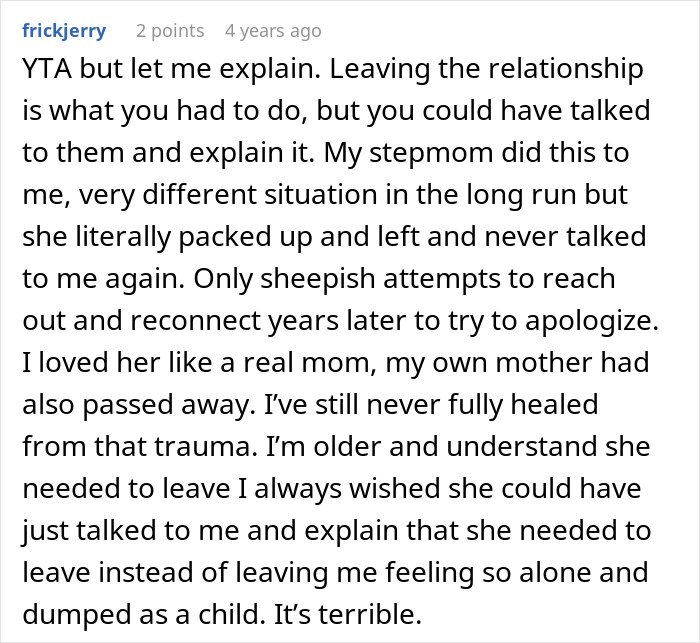
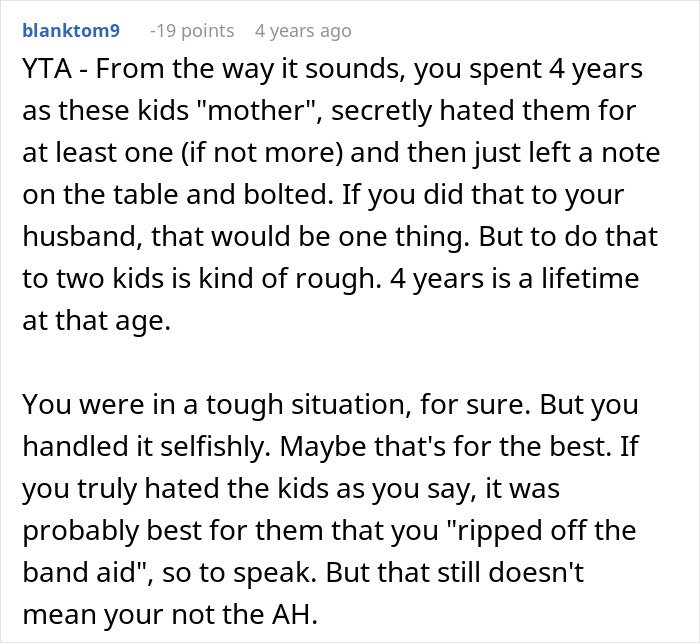
Others criticized her for leaving without explaining anything to the children. They argued the lack of closure caused lasting pain.







Leave a Reply