


Falling in love means giving up control and trusting someone without knowing how it will end.
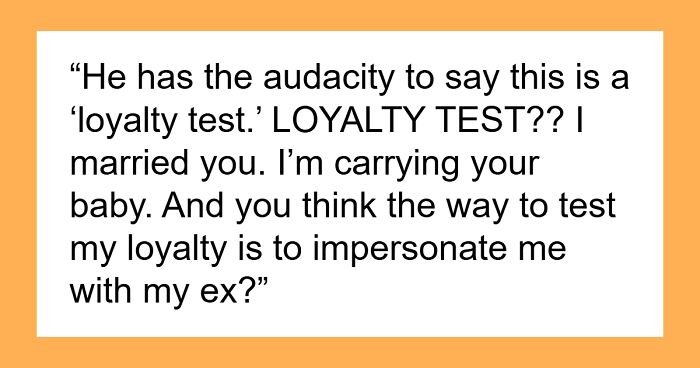
Reddit user ShabzSparq learned this the hard way. Four months pregnant, she found out her husband had not only been snooping on her phone but also using it to message her ex.
Pregnancy puts women through many different challenges

Image credits: EmilyStock (not the actual image)
But this expectant mother never thought the biggest challenge would come from her husband
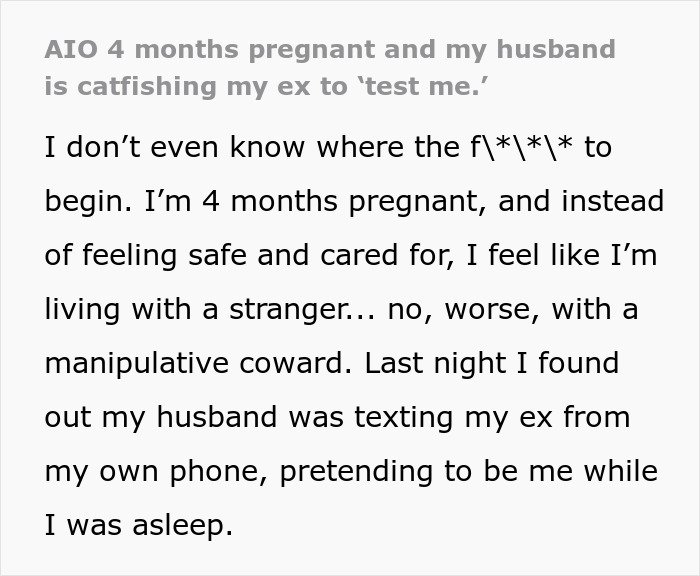
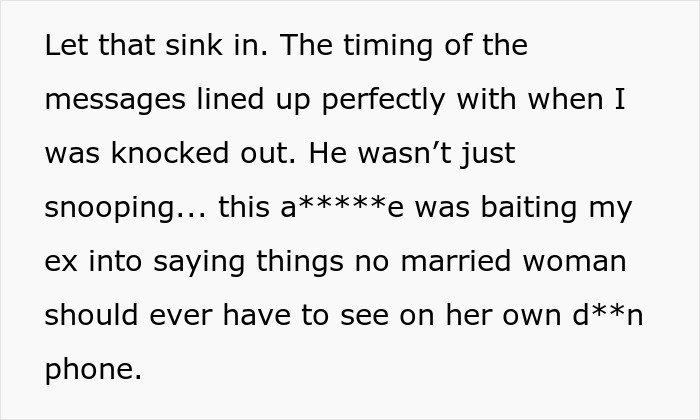
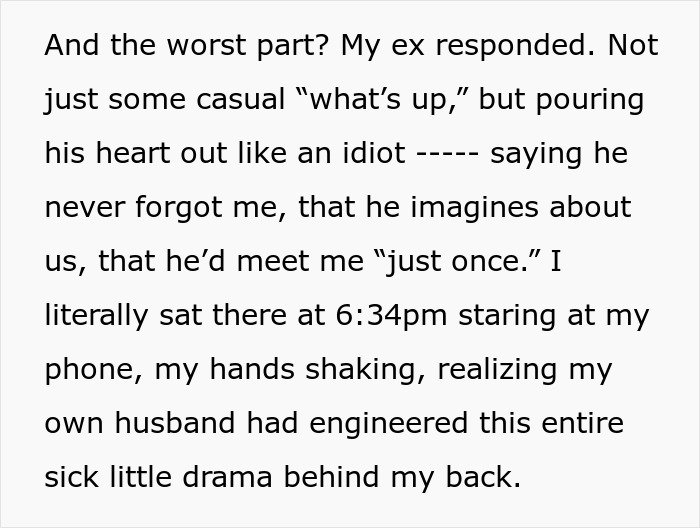
The woman shared the conversation her husband faked while posing as her to message her ex

Image credits: ShabzSparq

Image credits: ShabzSparq
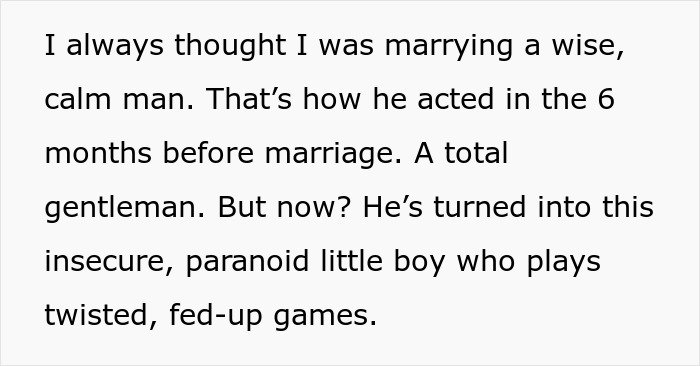

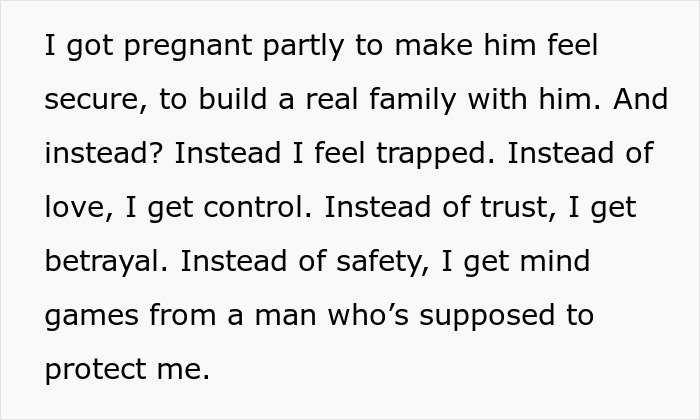

Image credits: Wavebreak Media (not the actual image)

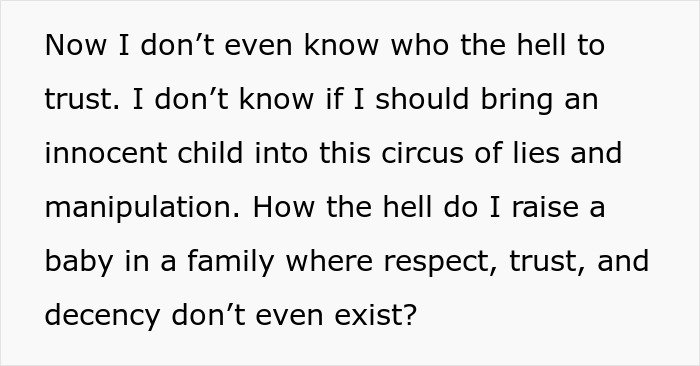
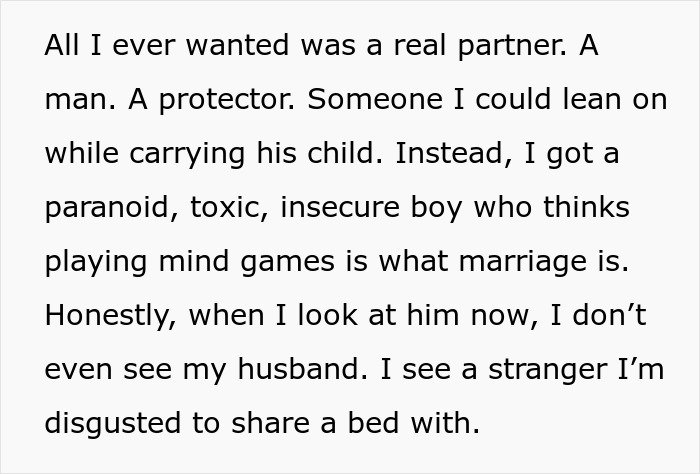
Image credits: ShabzSparq
Snooping is relatively common in romantic relationships, but it’s usually bad news
In a survey of 4,860 American adults, Pew Research Center found that 34 percent admit to looking through their partner’s phone without their knowledge, with women being more likely than men to say they’ve done this (42% vs. 25%).
However, at the same time, the public largely agrees that digital snooping in couples is wrong.
Seven-in-ten respondents – regardless of whether they are in a relationship or not – say it is rarely or never acceptable for someone to go through their partner’s phone without telling them.
And for good reason. According to Cortney Warren, Ph.D., ABPP, who is a board-certified clinical psychologist and former tenured associate professor of psychology at the University of Nevada, Las Vegas, snooping is generally associated with fights and breakups, no matter what information is (or isn’t) discovered.
To make her point, Warren cites a correlational study of 389 people in romantic relationships, in which phone snooping was a significant predictor of intention to break up. Similarly, in a study of 329 married individuals, researchers found that lack of trust was a significant predictor of relationship problems and that phone snooping partially explained the relationship between distrust and conflict. That’s because, if someone is snooping, they don’t trust their mate even if they find no evidence of cheating.
“In general, invading another person’s private space without their permission—whether it’s snooping on their phone, reading their personal journal, or invading their physical space—is unethical,” Warren explains. “As humans, we all have the right to our own autonomy. We have the right to share or not share personal experiences and information with others. Violating their boundaries through snooping is very likely to cause conflict with your partner, no matter what you find.”
But our case doesn’t stop there
The woman’s husband, however, took things even further. Susan Krauss Whitbourne, Ph.D., ABPP, is a Professor Emerita of Psychological and Brain Sciences at the University of Massachusetts Amherst. She says that “being plagued by the conviction that someone is cheating on you (or cheating you) can become pathological when it reaches constant and chronic proportions.”
The constant need to “test” people, particularly the one that’s closest to you — your romantic partner — can be seen as an extreme manifestation of jealousy. Even though it’s a basic and common emotion, jealousy becomes “morbid” when chronic and consistent preoccupations with infidelity frequently drive behaviors such as catfishing your wife’s ex.
“Jealousy isn’t the term that works best when applied to your need to test that carwash detailer, [for example,] but your desire to ensure 100 percent service can reflect a similar irrational fear. In both cases, you’re driven to behave in ways that do not reflect the commonsense conclusion that unless shown otherwise, there’s no reason not to trust someone,” Whitbourne adds.
According to her, people who experience obsessive morbid jealousy, know that their behavior is problematic and, as a result of shame or guilt, but their personalities are characterized by high levels of dependency, aggression, lack of trust, manipulativeness, exhibitionism, impulsivity, and a tendency to entice others, and these traits suggest that they might even have a personality disorder, including borderline, dependent, histrionic, and narcissistic.
In other words, constantly testing your partner’s loyalty may be a symptom of larger mental health issues, and while we can’t diagnose our Redditor’s husband, the woman probably shouldn’t leave things as is if she wants a calm and peaceful future.
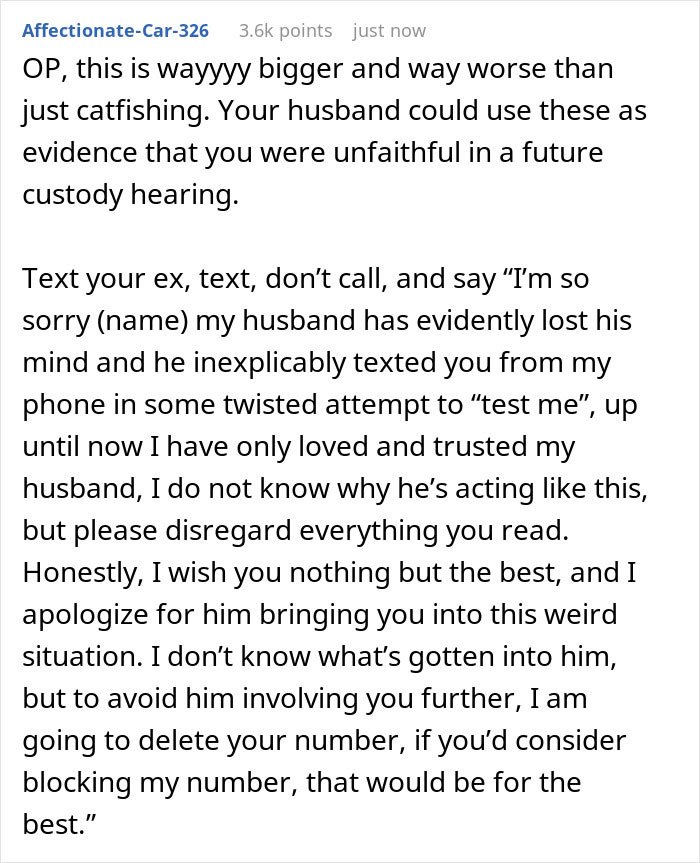
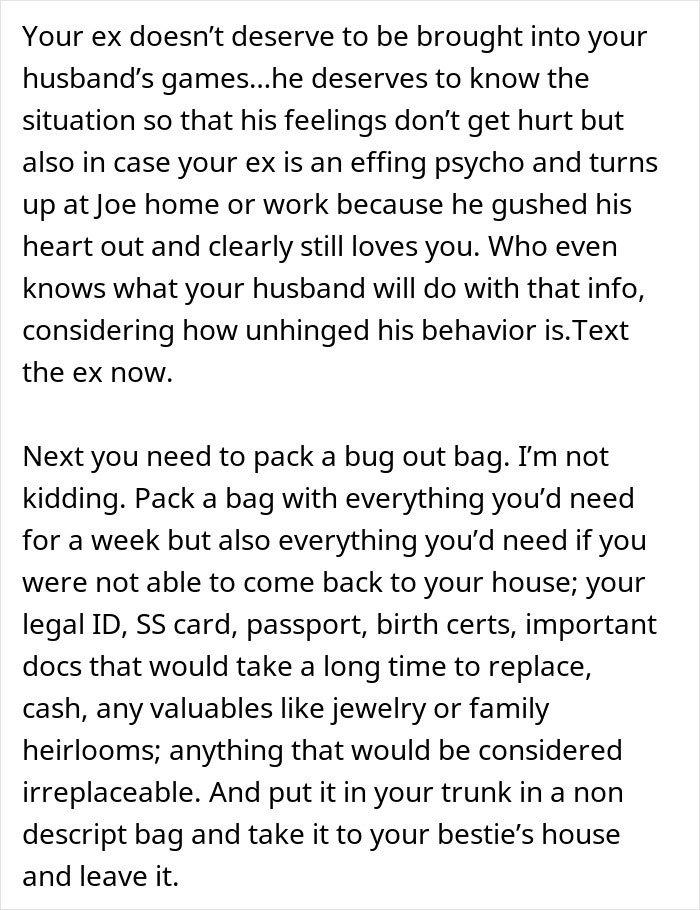
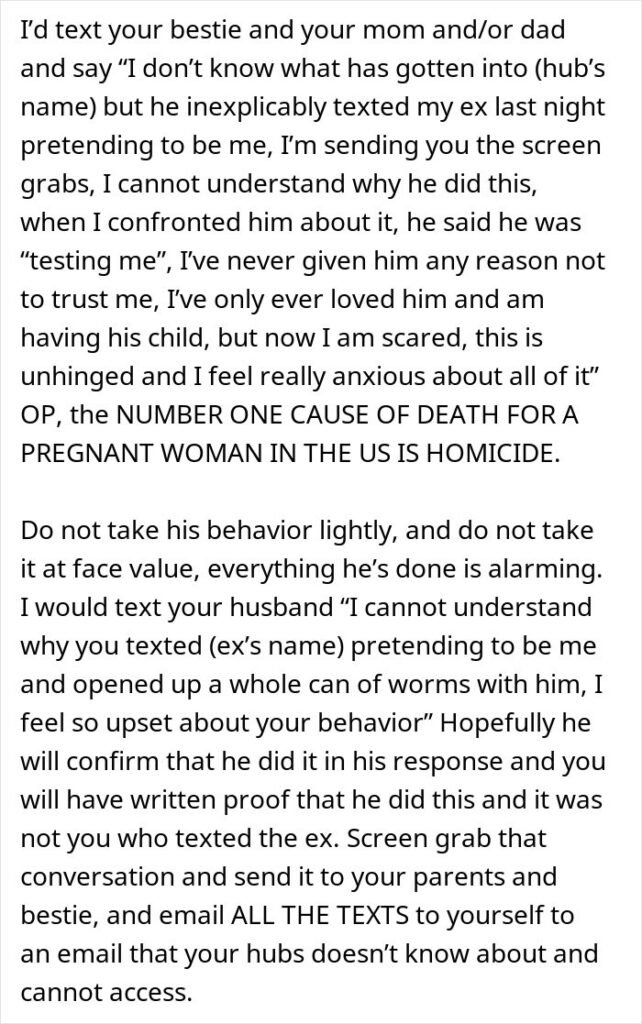
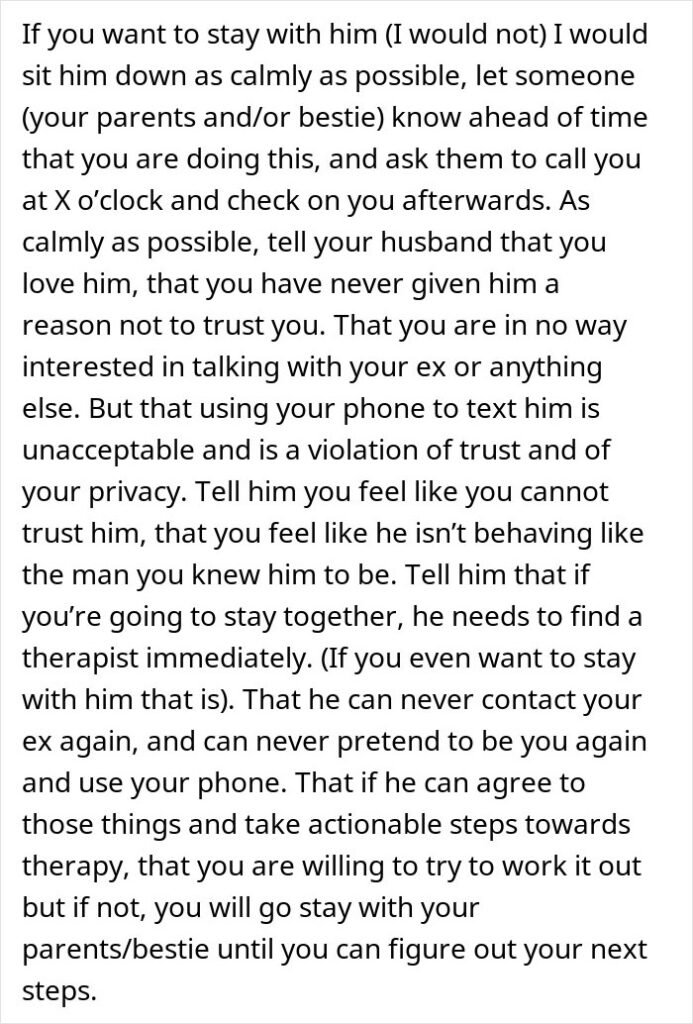
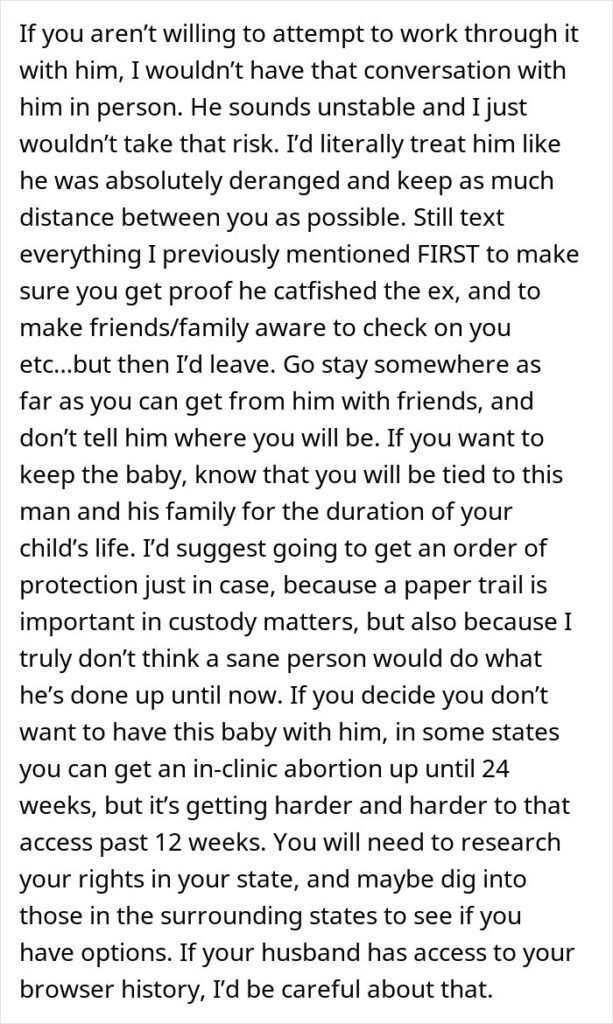
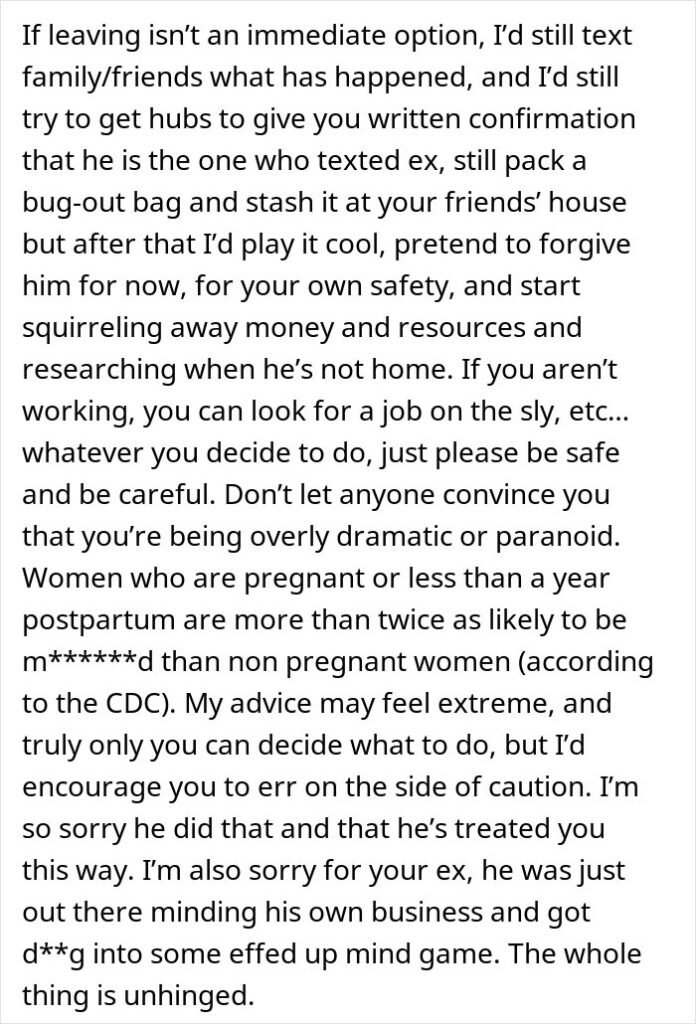
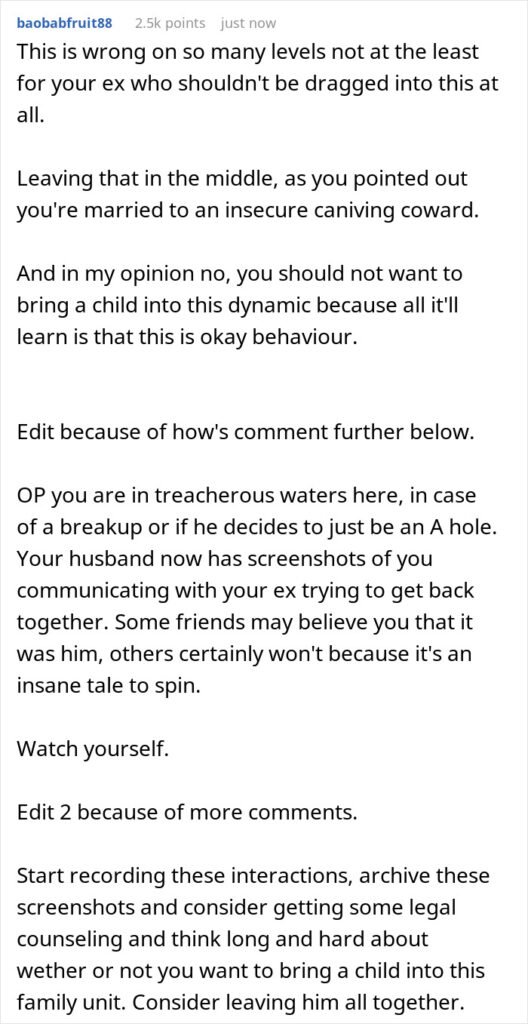
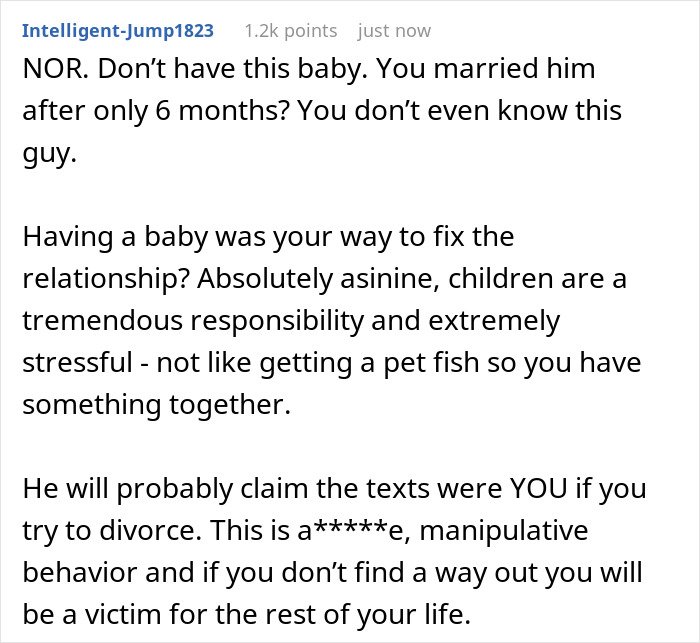
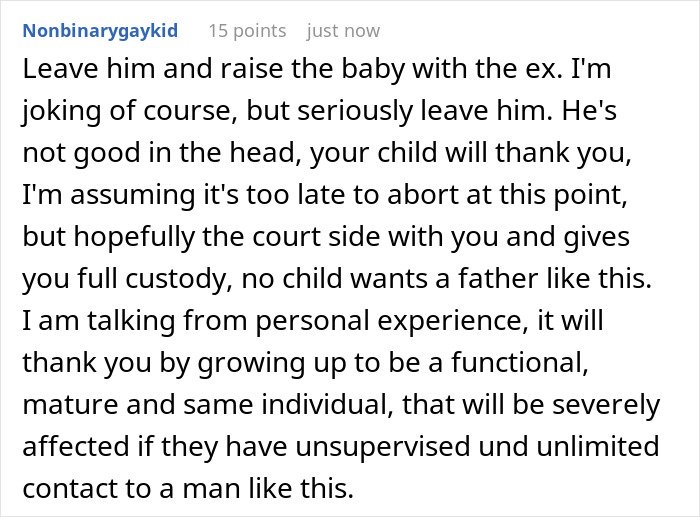
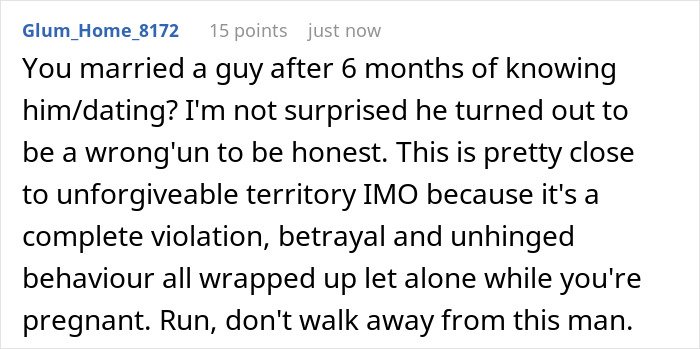
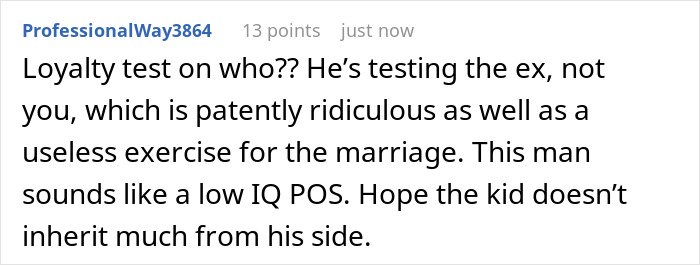
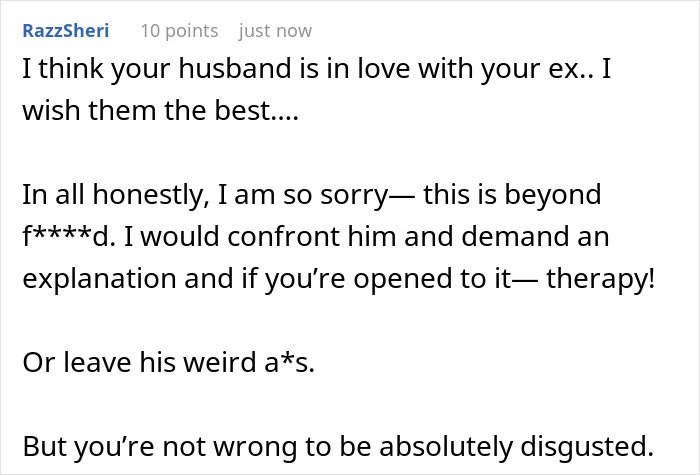
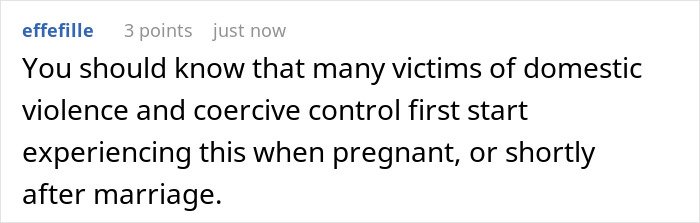
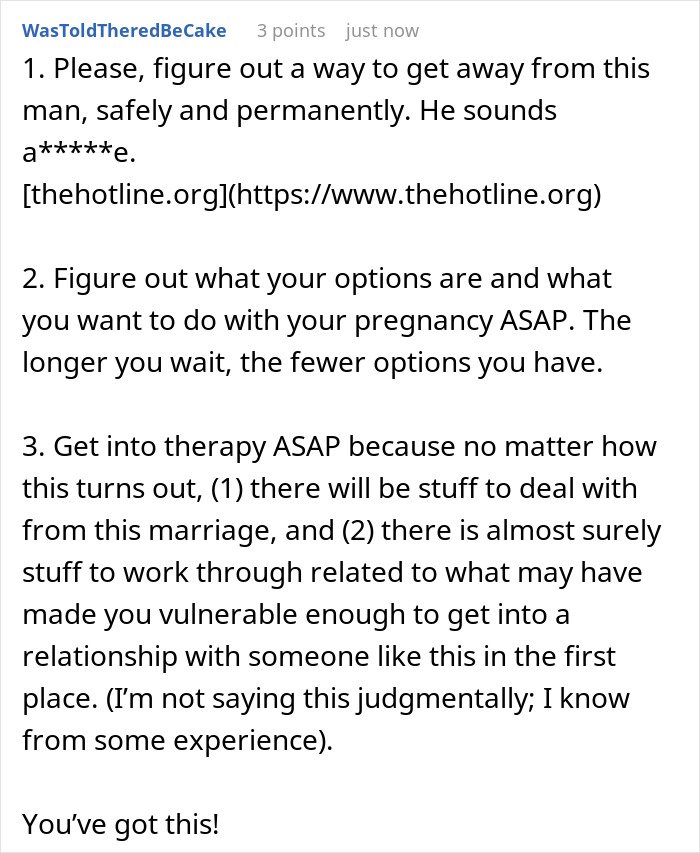
People have had a lot of strong reactions to this story


















Leave a Reply